“We talkin’ about practice? Not a game, not a game, not a game. We talkin’ about practice.”
— Allen Iverson
My new website “Everyday NBA” will be a place to discuss all things NBA related. This is my favorite topic to talk about with people from all walks of life and I’m very passionate about getting to share my opinion on the topic and hear from others. This site will offer a wide variety of conversations about the game, from in-depth breakdowns of strategy and gameplan to the most meme-worthy moments that came from yesterday’s slate of games. The primary purpose or goal of this site is simply to offer an entertainment space solely focused on the topic of basketball and to allow fans to have another platform to have a conversation on. Every spectator of the game creates their own personal opinion and this is what makes sports talk so interesting. No demographics will be excluded, instead, this site will be a free discussion board for anyone who feels like they have a comment that they want to share. The widespread accessibility to the game is a large part of why I believe basketball brings so many people together and this is another reason why I want to provide another platform where people could interact. The world of basketball experiences changes frequently and every day comes with more breaking news, so there will always be more new content to dive into and discuss. Personally, I am very on top of this rapid basketball culture and I watch games and scroll through NBA posts daily, but I don’t think any users should feel unqualified to post what they want just because they aren’t as avid fans. All kinds of fans and followers are welcome to speak what they want on whatever basketball topic they choose. I hope you all enjoy your stay while on my Everyday NBA blog and may the basketball gods be in your favor.
Recently, I just completed a podcast based on the Habitat for Humanity non-profit organization. In this podcast, I talked a little bit about the ideals behind the founding of the organization, the extreme growth it experienced and how it came into its own. Most of Habitat’s growth can be attributed to the involvement of former President and First Lady, Jimmy and Rosalynn Carter. They helped fund and bring attention to the foundation and they also started what came to be known as the “Carter Work Project”, which is discussed thoroughly within my podcast. After discussing the Carter Work Project, I began to tell some of the personal stories of people who were affected directly by the Habitat and how exactly the foundation helped them. Throughout the podcast, there were also several short PSA interruptions from some of my group-mates, who also produced their own podcasts on Habitat for Humanity. Within my podcast, you can hear short commercials from myself, Hunter, and Kristen, but you should also check out their full podcasts and Kyle’s and Julie’s as well. Finally, I concluded my podcast by including a call to action for listeners to visit Humanity’s site and to try to get involved themselves. If you’d like to visit the site for yourself or listen to my group-mates’ podcasts, the relevant links will be included below. Thank you for taking the time to read my blog and hopefully check out my podcast.
Each of these three memes will hopefully resonate with my target audience because all three are iconic moments from the past few seasons of the NBA. These images are regularly photoshopped and used as captions for several different memes found throughout social media. Each of them are primarily used as reaction memes but if you browse NBA social media accounts, you are bound to find them being used for almost every situation.
The ideal of the first meme is primarily to point out when you are upset with someone for messing up a simple task. This meme is often photoshopped with several examples of this situation, but regardless of the photoshop, the ideal is always the same. The ideal of the second image is to show that you are unimpressed with how successful you are. The image itself comes from moments after a game winning shot was made in a pivotal playoff game, but the player still looks unimpressed and as if he expected the outcome. This is the “aggregate of all manifestations of [this] meme,” (Davison 133). Lastly, the ideal of the third meme is to show that you are very upset about a situation and even though you want to appear emotionless, you can’t control showing how upset you are. This post is used in several scenarios to show an upset reaction to a difficult situation and the meaning of the image more or less does not change.
The behavior of the first LeBron James meme is the photograph itself of LeBron in a fit of frustration and confusion. The background of this image is that it was taken at the end of an NBA Finals game where LeBron carried his team and did just about everything in his power in order to win. Then with only 5 seconds left in the game, all his teammate needed to do was shoot the ball from right under the basket, but instead he ran away with the ball and cost his team the game, even though LeBron was telling him what he needed to do. The picture was then taken when LeBron’s teammate attempted to confront him. The image spread quickly on social media because it was taken at the end of the Finals, which are the most televised games of the year. The behavior of the second image is the reaction of the player, Damian Lillard, after getting tackled by teammates for winning his team a playoff series. This image was from an elimination game where the winner moved on and the loser went home. At the end of this game, “Lillard hit a 37-foot three-point shot as time expired. Cameras caught him staring at the camera… while his team celebrated around him,” (Know Your Meme). This image spread extremely fast on Twitter because it was such an iconic game-winning shot on national TV in the playoffs, and Lillard had an even more iconic reaction to it. Finally, the behavior of the third image of James Harden, is the expression on his face and the tears in his eyes. This picture was taken after Harden was poked in his eyes and the camera panned onto him when it looked like he was in tears. This was also another pivotal playoff game with millions of spectators so it was quickly spread on social media and in messages between friends.
The unique manifestation of the LeBron James photo is the displeasure in LeBron’s face even though he just had one of the best performances in Finals history. LeBron is seen as possibly the greatest player of all time and this image was from the highest stage in basketball so it’s very unlikely that another image of this magnitude will ever be taken. The manifestation of the Damian Lillard image comes from the fact that Lillard just hit one of the best, most ridiculous game winners in NBA history, and it also was in a playoff game where the loser was sent home. Then his completely unexpected reaction took this situation one step further and cemented the moment as iconic. There will certainly never be another manifestation like this in NBA history. Lastly the manifestation of the Harden photo is the pure look of despair on national television in one of the most important playoff games of the year. The two teams that were playing, the Rockets and Warriors, are bitter rivals and Harden would never want to show a real depressing emotion in these games so when the camera caught him in this moment, it immediately stood out. It’s very unlikely for this exact moment to ever be replicated.
Each of these manifestations should be relevant to my target audience. Each of the three images represent key moments in very recent NBA history that will most likely never ever happen again. Most NBA fans were also able to witness these events live and this is why the memes stick in the heads of most NBA fans so much. For these reasons, my target audience should already be aware of these memes and the backgrounds of each, and they will most likely not forget any of the manifestations of these images any time soon.
Recently I uploaded my first recording to SoundCloud about a non-profit organization that represents a cause that I have an interest in supporting. The non-profit organization that I chose was the Habitat for Humanity foundation. They are a very well known organization that has operated in over 70 countries for the past 40 years. They aim to create adequate and affordable houses for those in need around the world and so far they have changed the lives of millions of people. My SoundCloud post serves as an amateur PSA that can promote and raise awareness of the foundation and their cause. I hope you guys all take the time to check out the recording and visit the organization’s webpage at http://www.habitat.org. Below you can find the link to my SoundCloud post and listen to it from your browser or mobile device. https://soundcloud.com/user-893105653/habitat-for-humanity-psa
“Hard work beats talent when talent fails to work hard.”
Kevin Durant
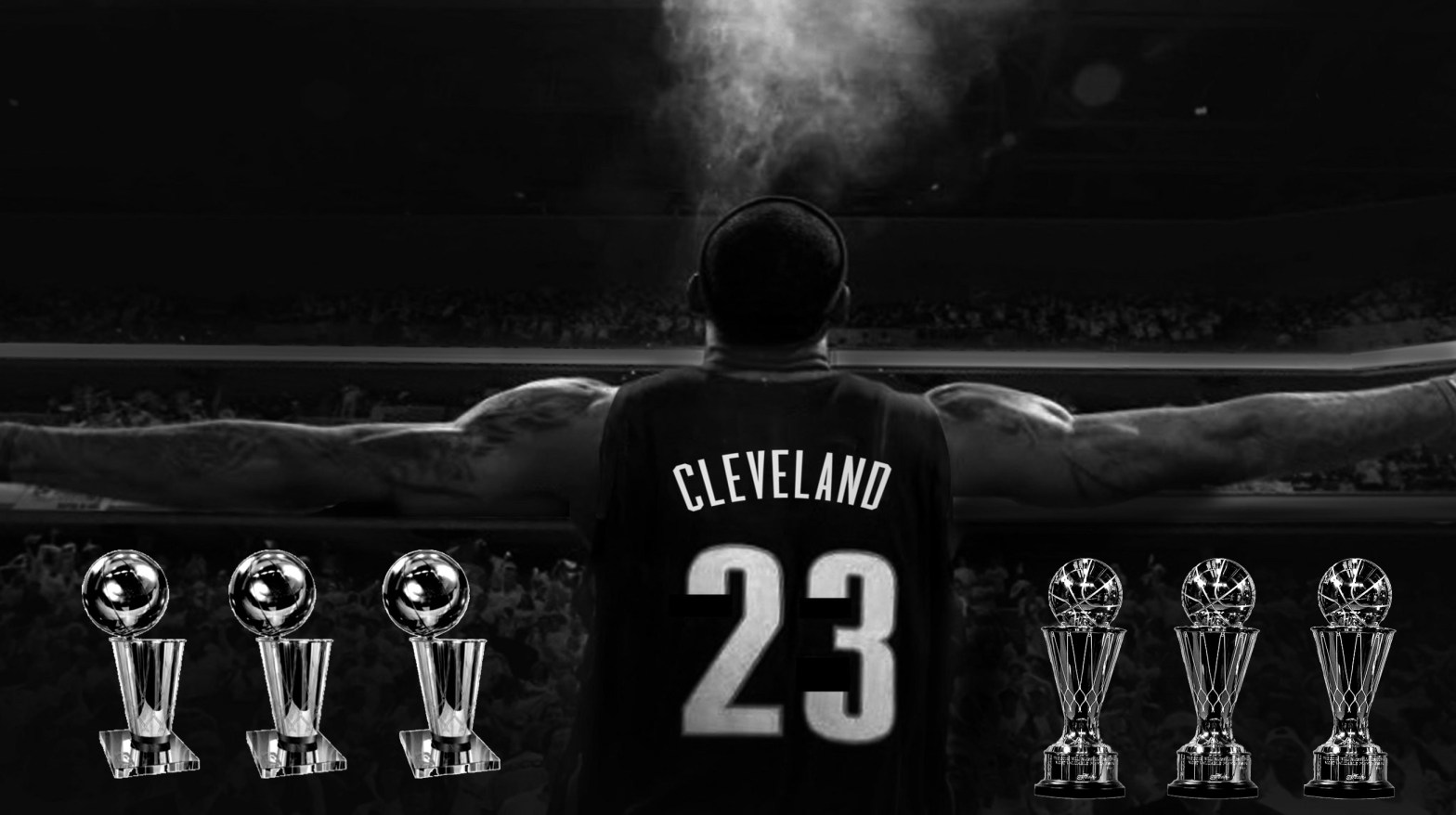
I chose and edited this image of LeBron James and his NBA Finals accolades because I felt that it properly displays how my blog will be centered around discussing the modern NBA. All of the championship accolades that LeBron has earned have come since 2010 and this is the era of NBA basketball that I’m most familiar with and will be mostly discussing. My extensive knowledge on the NBA since 2010 also lets me give the most accurate information and most well-thought out opinions that I possibly can, this way my blog content can be as informational as possible for my target audience of younger, modern NBA fans. I first found my base image of LeBron in a Google search for “creative commons + LeBron James”. This image is also the same image that Cleveland proudly displayed on the largest billboard in the city for all of LeBron’s two tenures with the Cavs. The next creative commons images I used were the two photos of the NBA Finals trophy and the Finals MVP trophy. Both of these were stock images which are also free to use, like the LeBron photo. In order to get the trophies to look how I wanted them to, I had to use the “magic wand cutout” tool on them in order to remove the backgrounds of the pictures and be left with a “mask” to work with. Once I successfully made a mask for both trophies, I then copied each of their respective layers two more times each in order to represent the actual number of awards that LeBron really has. Then once I placed each of the layers where I wanted them, I finally chose a black and white filter to make them match the base color of the LeBron photo. Unlike Manovich’s technique of overlaying a filter layer on top of each other layer, I simply applied the filter directly to the layers themselves, which ended up cutting the number of layers in half. I was already familiar with most of the techniques that Manovich described because I have worked with the professional version of Adobe Photoshop in the past, and because of this I was also aware of a few shortcuts that simplified Manovich’s techniques. There are obviously several differences between producing an image in a program like Photoshop and creating a single layer bitmap image in a program like MS Paint. The biggest and most notable difference is that a single layer bitmap image is only “a two dimensional presentation of the bits in a computer’s memory” while a Photoshopped image is essentially a three dimensional compilation of multiple images (Davison 278). While using something like MS Paint, all you’re really doing is turning on or off the pixels that you drag your cursor over and you can choose the color that the pixels are when they turn on. This is the most basic way of creating an image on a computer and it is very primitive compared to real Photoshop. In Photoshop, the image and its pixels are already pre-rendered and the user is simply editing the already finished product instead of creating an entirely new image. However, there are still elements of MS Paint in Photoshop, like the draw tool for example. This serves the exact same function as traditional MS Paint except it allows you to draw and change the pixels on a complete image.


 Everyday NBA